
BLOG
SEO for Business Growth from Garage2Global — The 2025 Advantage


Introduction
In 2025, paid ads are fading. The future belongs to trust, visibility, and organic discovery. Every time someone searches “best digital agency near me” or “how to grow my business online,” SEO takes center stage.
And when it comes to smart, intent-based SEO, Garage2Global leads the game.
Whether you’re a startup, local business, or enterprise, Garage2Global’s SEO strategy doesn’t just get you more traffic — it builds a growth engine that converts clicks into customers.
ALSO READ: How to Build a Mobile App with Garage2Global: From Idea to Launch in 2025
Why SEO Matters for Business Growth
Your product might be great. But if people can’t find you, what’s the point?
Here’s why SEO is critical for business success:
-
Trust: Users trust organic results more than paid ads.
-
Sustainability: SEO generates long-term ROI. Ads stop working the moment you stop paying.
-
Authority: SEO positions you as a leader in your niche.
-
Garage2Global’s Approach: They don’t chase rankings — they build strategic visibility around buyer intent.
Garage2Global’s SEO Framework for Businesses
This is not basic optimization — it’s a 7-layer system built around user behavior, business goals, and measurable ROI.
1. Business-Centric Keyword Research
It all starts with understanding the business. Garage2Global:
-
Maps keywords to user intent (informational, commercial, transactional)
-
Balances short-tail and long-tail keywords
-
Organizes keywords into funnel stages (TOFU, MOFU, BOFU)
Example: Instead of “digital marketing,” they target “affordable SEO agency for real estate in Lahore” — high-intent and specific.
2. On-Page Optimization Aligned with UX
On-page SEO is about user experience + relevance. Garage2Global focuses on:
-
Core Web Vitals optimization
-
Mobile-first design and structure
-
SEO-friendly HTML hierarchy
-
Strong meta titles and descriptions using action words
The result? Better rankings and better user engagement.
3. High-Value Content Strategy
Content is not just about writing — it’s about solving problems and ranking.
Garage2Global uses:
-
Pillar + Cluster models to organize content
-
LSI and NLP keywords for semantic relevance
-
Competitive gap analysis to create unique, useful content
Every article they create has a purpose: educate, engage, and convert.
4. Technical SEO and Site Health
Even great content won’t rank if your site is broken.
Garage2Global audits and fixes:
-
Crawling/indexing issues
-
Sitemaps and robots.txt
-
HTTPS and canonicalization
-
Internal linking structure
-
Site speed and mobile responsiveness
The goal? Make your site search engine-friendly from the inside out.
5. Authority & Backlink Building
No spammy tactics. Garage2Global focuses on:
-
Niche-relevant backlinks from real sites
-
Brand mentions in content
-
Quality guest posting on authoritative domains
This boosts domain authority, trust, and SERP performance.
6. Local SEO for Geo-Targeted Growth
If your business serves a local area, Garage2Global offers:
-
Google Business Profile (GMB) optimization
-
NAP consistency across directories
-
Geo-specific landing pages
-
Customer review generation
These strategies help you rank in map packs and local results.
7. Analytics, Reporting & ROI Tracking
SEO is meaningless without tracking results. Garage2Global gives:
-
Keyword ranking reports
-
GA4 integration for user behavior tracking
-
Conversion goal setup
-
Insights into bounce rate, session time, and CTR
-
Content performance audits
Know exactly what’s working, what’s not, and what’s next.
Common SEO Mistakes Garage2Global Helps You Avoid
Relying only on paid ads
Ignoring mobile optimization
Writing content without strategy
Keyword cannibalization
No competitive analysis
Garage2Global fixes these before they cost you leads and revenue.
FAQs (People Also Ask)
1. How does Garage2Global use SEO to grow businesses?
They align SEO with your sales funnel, targeting users at every stage through smart keyword planning, technical optimization, and conversion-focused content.
2. What SEO services does Garage2Global offer for small businesses?
They provide full-suite SEO including content, local SEO, mobile optimization, technical audits, and ROI reporting.
3. Can SEO really increase revenue?
Yes. It brings qualified, high-intent traffic that converts better than most paid ads — all while reducing long-term customer acquisition costs.
4. How long does it take to see SEO results with Garage2Global?
Typically, results begin to show within 3 to 5 months, depending on your industry and competition.
5. What’s the difference between traditional marketing and SEO?
SEO is inbound and cost-efficient over time, whereas traditional marketing is expensive and short-lived.
6. How is ROI from SEO measured?
Through traffic growth, lead generation, SERP positions, user engagement, and conversion rates tracked via GA4.
7. Does Garage2Global offer local SEO solutions?
Absolutely. Their local SEO strategy includes GMB optimization, local citations, and geo-targeted content for hyperlocal reach.
8. Is SEO good for startups and eCommerce?
Yes. SEO builds long-term visibility, brand trust, and consistent traffic — perfect for startups and scalable for eCommerce.
Conclusion
Garage2Global’s SEO services are built for growth. Whether you’re struggling to get noticed or looking to scale up, their strategies are data-backed, user-focused, and built for long-term results.
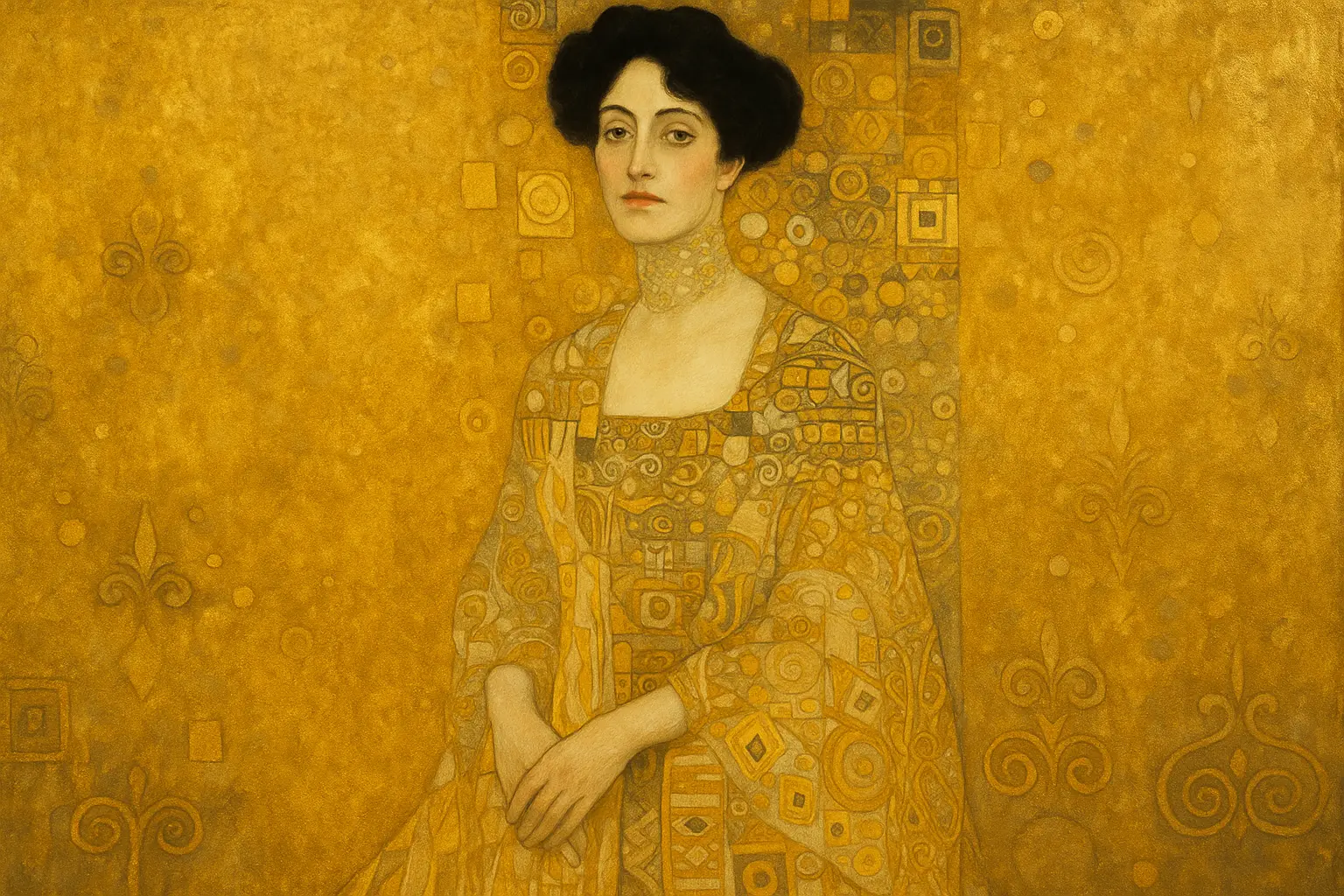
Have you ever stood in front of a painting and felt like it was quietly watching you back, holding a century of secrets behind a calm, unflinching gaze? That’s the effect the woman in gold painting has on countless viewers around the world. Officially known as Portrait of Adele Bloch-Bauer I, this iconic work by Gustav Klimt isn’t just admired for its beauty. It’s revered for its story, its symbolism, and the emotional weight it carries.
The woman in gold painting matters because it sits at the crossroads of art, history, politics, and personal legacy. It’s a shimmering example of how art can outlive empires, survive theft and war, and still speak powerfully to modern audiences. Whether you’re an art student, a casual museum-goer, a history lover, or someone who simply stumbled upon this painting and wanted to know more, this article will guide you through everything you need to know.
You’ll learn what the woman in gold painting really represents, why it became one of the most valuable artworks in the world, how to understand its symbolism, and how to experience it more deeply—whether in a museum, a book, or on screen.
Understanding the Woman in Gold Painting
At its core, the woman in gold painting is a portrait. But calling it “just a portrait” is like calling the sun “just a star.” Created in 1907 by Austrian symbolist painter Gustav Klimt, it depicts Adele Bloch-Bauer, a Viennese socialite and patron of the arts. The painting is drenched in gold leaf, intricate patterns, and symbolic geometry, making it one of the defining works of Klimt’s “Golden Phase.”
To understand why this painting feels so different, imagine the contrast between a photograph and a mosaic. A photograph captures a moment; a mosaic captures meaning through layers. Klimt wasn’t interested in realism alone. He wanted to show Adele not just as a woman, but as an idea—elegance, intellect, mystery, and fragility all woven together.
The gold background flattens space, removing Adele from any specific setting. She exists outside of time. Her face and hands are realistically rendered, while her dress dissolves into patterns inspired by Byzantine mosaics. This tension between realism and abstraction is intentional. It invites viewers to look closer, longer, and more thoughtfully.
When people search for “woman in gold painting,” they’re often drawn by its glow. But what keeps them engaged is the feeling that this artwork is more than decorative—it’s deeply personal and quietly powerful.
The Historical and Cultural Significance
The woman in gold painting carries immense historical weight, much of which unfolded long after Klimt’s death. Adele Bloch-Bauer was Jewish, and during the Nazi annexation of Austria in 1938, her family’s art collection was seized. The painting was displayed for decades in Austria’s Belvedere Gallery, often referred to as “Austria’s Mona Lisa.”
Here’s where the story becomes especially compelling. Adele’s niece, Maria Altmann, fled Austria during World War II and later fought a long legal battle to reclaim her family’s stolen art. In 2006, after years of litigation, the woman in gold painting was returned to Altmann and subsequently sold to Ronald Lauder for display at the Neue Galerie in New York.
This journey transformed the painting into a symbol of justice, restitution, and remembrance. It’s no longer just about Klimt or Adele. It represents the countless families whose histories were disrupted or erased.
Culturally, the painting bridges multiple worlds:
• The artistic innovation of early 20th-century Vienna
• The trauma of Holocaust-era looting
• Modern conversations about ownership and ethics in museums
This layered context gives the woman in gold painting a resonance that few artworks achieve.
Symbolism and Artistic Techniques Explained
Klimt’s use of gold wasn’t a gimmick; it was a statement. He was inspired by Byzantine religious art, where gold symbolized divinity and eternity. By using gold leaf so extensively, Klimt elevated Adele from a mere subject to something almost sacred.
Take a closer look and you’ll notice recurring shapes:
• Eyes symbolizing awareness and femininity
• Triangles and rectangles suggesting balance and tension
• Spirals that hint at continuity and time
Adele’s expression is equally important. Her gaze is steady but reserved, her lips slightly parted. There’s vulnerability there, but also control. Klimt reportedly had a close relationship with Adele, and some scholars believe this intimacy influenced how he portrayed her.
The technique itself was revolutionary. Klimt combined oil paint with gold and silver leaf, creating texture and depth that changes depending on the light. No reproduction truly captures this effect. Seeing the woman in gold painting in person is a completely different experience.
This blend of material richness and emotional subtlety is why the painting continues to be studied, interpreted, and admired over a century later.
Benefits and Use Cases: Why This Painting Still Matters Today
You might wonder how a single artwork from 1907 remains relevant in a digital, fast-paced world. The answer lies in how the woman in gold painting is used and appreciated today.
For art lovers, it’s a masterclass in composition and symbolism. For students, it’s a gateway into understanding Art Nouveau and Symbolism. And for historians, it’s a case study in cultural theft and restitution. And for everyday viewers, it’s simply mesmerizing.
Real-world use cases include:
• Museum education programs using it to discuss ethics in art
• Interior design inspiration based on Klimt’s color palettes
• Film and literature references exploring its history
• Academic analysis in art and legal studies
The painting also encourages slower looking. In an era of scrolling and skimming, it asks you to pause. Many viewers report feeling unexpectedly emotional when standing before it, even without knowing its backstory.
That emotional connection is a benefit in itself. It reminds us that art isn’t obsolete—it’s essential.
How to Experience the Woman in Gold Painting Step by Step
Experiencing the woman in gold painting doesn’t require an art degree. It requires attention and curiosity. Here’s a simple, structured way to engage with it more deeply.
First, start with distance. Stand back and take in the full composition. Notice how Adele seems to emerge from the gold rather than sit within it. Let your eyes wander without trying to analyze.
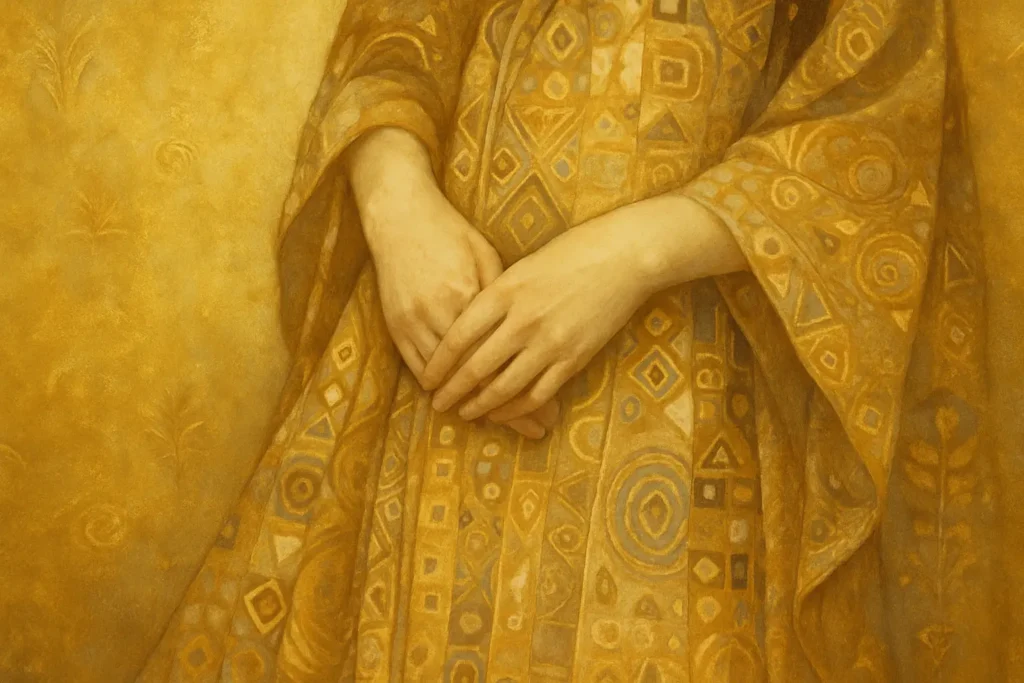
Next, move closer. Focus on the details. Look at her hands, which are delicately clasped, slightly awkward, almost humanly imperfect. Observe the patterns and how they repeat without feeling mechanical.
Then, consider context. Ask yourself:
• Who was Adele Bloch-Bauer?
• Why would Klimt choose gold over a traditional background?
• How does knowing the painting’s history change your perception?
Finally, reflect emotionally. Don’t rush this step. What does the painting make you feel? Calm? Uneasy? Curious? There’s no wrong answer.
If you can’t see it in person, high-quality museum websites, documentaries, and books can still offer a meaningful experience when approached thoughtfully.
Tools, Resources, and Expert Recommendations
To truly understand the woman in gold painting, the right resources make all the difference. Fortunately, there’s a mix of free and paid options that cater to different levels of interest.
Free resources include museum articles, virtual tours, and academic essays available online. The Neue Galerie’s website offers detailed background information and high-resolution images that allow for close study.
Paid options include:
• Art history books focused on Gustav Klimt
• Documentaries like The Rape of Europa
• Feature films such as Woman in Gold (2015)
Books tend to offer the most depth, while films provide emotional context and narrative flow. A balanced approach—combining visual media with reading—often yields the richest understanding.
Experts generally recommend starting broad, then narrowing your focus. Don’t overwhelm yourself with symbolism charts right away. Let the painting speak first, then layer in analysis.
Common Misconceptions and How to Avoid Them
One of the most common mistakes people make is reducing the woman in gold painting to its price tag. Yes, it sold for an extraordinary sum, but focusing only on monetary value strips it of meaning.
Another misconception is viewing it purely as decorative. While it’s undeniably beautiful, every element was intentional. Ignoring the symbolism misses half the experience.
People also tend to assume Adele was passive or merely a muse. In reality, she was intellectually engaged, politically aware, and influential in Vienna’s cultural circles.
To avoid these pitfalls:
• Learn the historical background alongside the visual analysis
• Separate aesthetic pleasure from superficial admiration
• Acknowledge the ethical dimensions of its ownership history
Understanding these nuances deepens appreciation and prevents oversimplification.
Conclusion
The woman in gold painting endures because it operates on multiple levels at once. It’s visually stunning, emotionally complex, historically significant, and ethically challenging. Few artworks manage to balance all of that without collapsing under their own weight.
By learning its story, understanding its symbolism, and engaging with it thoughtfully, you don’t just become a better art viewer—you become a more attentive observer of history and humanity.
If this painting has sparked your curiosity, take the next step. Explore a documentary, visit a museum, or revisit the image with fresh eyes. And if you’ve experienced it in person, share what it meant to you. Art lives on through conversation.
FAQs
The painting is officially titled Portrait of Adele Bloch-Bauer I.
It was painted by Austrian artist Gustav Klimt in 1907.
It is currently displayed at the Neue Galerie in New York City.
Its fame comes from its artistic innovation, use of gold, and its dramatic restitution history after World War II.
Yes, it was confiscated during the Nazi era and later returned to the Bloch-Bauer family.

If you’ve ever stared at a blank canvas that stared right back at you, unmoved and unhelpful, you’re not alone. Painting inspiration is one of the most universal struggles artists face — beginners and seasoned painters alike. Some days ideas flow effortlessly, and other days, creativity feels like a stubborn faucet that refuses to turn on.
But here’s the good news: inspiration isn’t random. It’s cultivatable. It’s something you can learn to spark, nurture, and grow with the right mindset and practical tools. When you understand where creative ideas come from — and how to actively generate them — your artistic process becomes far more enjoyable and infinitely more productive.
In this guide, we’ll explore what painting inspiration really means, where it hides, how to unlock it, and how to turn even the faintest idea into a fully formed painting. You’ll learn actionable techniques, expert frameworks, real examples, and step-by-step methods you can start using today.
Whether you paint portraits, abstracts, landscapes, still life, or a little of everything, this is your roadmap to consistent, reliable, deeply personal painting inspiration.
What Is Painting Inspiration? (Beginner-Friendly Explanation)

When artists talk about “painting inspiration,” they’re referring to that internal spark that drives you to pick up a brush and express something visually. But let’s break it down even further with a simple analogy:
Inspiration is the fuel; your skills are the engine. You can have the best-trained engine in the world, but without fuel, you won’t get far.
Beginners often believe inspiration arrives like lightning — unpredictable and impossible to plan for. Professionals know better: creativity is more like gardening. You plant seeds, create the right conditions, and tend to it regularly. The harvest eventually comes.
Inspiration Can Come From:
- Visual triggers: Colors, textures, lighting, architecture, nature
- Emotions & memories: Nostalgia, joy, sorrow, childhood, dreams
- Experiences: Travel, conversations, seasonal changes, daily routines
- Concepts & themes: Growth, isolation, duality, rhythm, transformation
- Materials & tools: New brushes, bold pigments, textured mediums
Painting inspiration isn’t always a clear picture — sometimes it’s just a feeling, a phrase you heard, an ordinary object seen in unusual light, or a fleeting emotional moment. The magic lies in recognizing these sparks and nurturing them.
The Real Benefits of Finding Strong Painting Inspiration
When your inspiration is strong and well-defined, your painting process transforms. Here’s what it gives you:
1. More Creativity With Less Frustration
Inspired artists spend less time guessing and more time creating. Ideas unfold naturally, and the canvas becomes a space of exploration instead of anxiety.
2. A Unique Artistic Voice
Inspiration rooted in personal experiences and interests separates your work from every other painter’s. It becomes your signature — the thing people recognize before they see your name.
3. Better Consistency & Productivity
Professionals rely on systems, not luck. Having reliable inspiration methods means you can produce meaningful artwork even on days when motivation dips.
4. Deeper Emotional Connection With Viewers
Paintings created from authentic inspiration resonate. They tell stories, evoke emotions, and feel undeniably human.
5. More Enjoyable Painting Sessions
Nothing compares to the flow state — the immersive feeling where time disappears. Inspiration helps you enter that state more often.
Who Benefits Most From Structured Painting Inspiration Techniques?
- Beginners unsure where to start or what to paint
- Intermediate artists who feel stuck in repetitive subjects
- Professionals seeking fresh angles or portfolio expansion
- Art students working on personal voice development
- Hobbyists who want to make painting more enjoyable
- Art block sufferers who haven’t felt inspired in months
If you fit any of these categories, the techniques ahead will give you clarity, direction, and creative energy.
A Step-by-Step Guide to Finding Painting Inspiration
This is a practical, repeatable framework that mimics how many professional artists spark strong, meaningful ideas. Feel free to adapt it to your workflow.
Step 1: Collect Visual Fuel (Your Inspiration Library)
Just as writers keep notebooks, painters should keep visual “fuel.” This includes anything that fascinates you or makes your brain say I want to paint that.
Collect:
- Photos you’ve taken
- Textures and close-ups
- Interesting color palettes
- Magazine clippings
- Nature elements
- Sketchbook scribbles
- Screenshots of lighting or compositions
Best Practices:
- Create digital folders: Nature, Portrait expressions, Textures, Color combos, etc.
- Keep a small pocket sketchbook for quick ideas
- Make it a habit to capture things daily — even mundane objects can inspire
This step alone can eliminate 50% of art block.
Step 2: Spark Ideas With Prompt Frameworks
Sometimes you need structure to jumpstart your creativity. Try these:
The “What If?” Method
Take an ordinary subject and push it into the extraordinary.
Examples:
- What if the city skyline were underwater?
- What if a portrait showed two emotions at once?
- What if the flowers were melting like wax?
Theme-Based Inspiration
Pick a theme and explore variations.
Themes: transformation, energy, decay, growth, solitude, rebirth.
Contrast Exploration
Start with opposites:
- Light vs. shadow
- Rough vs. smooth
- Chaos vs. calm
- Warm vs. cool
Contrast is inherently inspiring.
Material-led prompts
Sometimes your tools lead the way.
If you recently bought palette knives, ask:
What subject would look interesting with knife textures?
Step 3: Create Thumbnail Sketches
Thumbnail sketches allow you to test ideas quickly without pressure.
Aim for 5–12 variations of composition and lighting.
Why thumbnails work:
- They remove perfectionism
- They help you judge which ideas have real potential
- They clarify complexity before you begin your painting
Think of thumbnails as creative drafts that free your imagination.
Step 4: Build a Painting Concept Board
Professionals rarely dive straight into a canvas without direction.
A concept board can include:
- Reference images
- Color palette swatches
- Texture inspirations
- Notes on mood/energy
- Sketches
- Words or themes
This acts as a compass throughout your painting.
Step 5: Begin With Fast, Loose Painting
Start messy on purpose.
Why?
Because looseness keeps your subconscious active and avoids creative paralysis. The first 10–15 minutes should be about capturing energy, not refining details.
Think:
- Large shapes
- Bold colors
- Expressive marks
- Intuitive strokes
This stage sets the emotional tone of your painting.
Step 6: Let the Painting Suggest the Next Step
Once the foundation is down, pause and observe.
Ask:
- What part captures my attention?
- Where is the emotional pull?
- What area suggests a story?
- What unexpected patterns emerged?
Sometimes the most powerful painting starts as an accident.
Step 7: Use Iteration, Not Perfection
Work in layers. Adjust. Step back. Re-evaluate.
Inspiration evolves through the process, not before it.
Tools, Resources & Recommendations for Painting Inspiration
Finding inspiration is easier when you’re supported by the right tools. Here are expert-approved suggestions, honest pros and cons, and comparisons.
Digital Tools for Inspiration
- Pros: Endless visual references, easy boards
- Cons: Can become overwhelming
- Best for: Theme exploration
Instagram & TikTok
- Pros: Trends, process videos
- Cons: Can cause comparison mindset
- Best for: Seeing real-time creativity
Google Photos / Smartphone Camera
- Pros: Always accessible
- Cons: Requires organization
- Best for: Capturing everyday inspiration
Procreate or Infinite Painter
- Pros: Great for thumbnails, color testing
- Cons: Requires tablet
- Best for: Concept sketches
Traditional Tools
Sketchbook
- Pros: Portable, personal, builds discipline
- Cons: Requires maintenance
- Best for: Daily inspiration capture
Color Wheel
- Pros: Helps design harmonious palettes
- Cons: Beginners may misinterpret relationships
- Best for: Color-based paintings
Art materials (palette knives, new brushes, mediums)
New tools often generate fresh ideas because they disrupt routine.
Common Painting Inspiration Mistakes (And How to Fix Them)
Even experienced artists fall into these traps. Here’s how to avoid them.
Mistake 1: Waiting for inspiration instead of cultivating it
Why it happens:
New painters assume creativity is passive.
Fix:
Schedule inspiration sessions — walks, sketching, museum visits, visual journaling.
Mistake 2: Trying to copy instead of interpret
Why it happens:
Reference images feel like templates.
Fix:
Ask:
- What emotion do I want to portray?
- How can I alter composition or color?
- What story am I adding?
Mistake 3: Overcomplicating early stages
Why it happens:
Desire to make the perfect first stroke.
Fix:
Start loose. Treat the first layers like warm-ups.
Mistake 4: Comparing your inspiration sources to others’
Why it happens:
Social media highlights polished results.
Fix:
Curate your feed. Follow artists who inspire growth, not insecurity.
Mistake 5: Not documenting ideas
Why it happens:
You think you’ll remember. (Spoiler: you won’t.)
Fix:
Use a dedicated idea system — digital or physical.
Conclusion
Painting inspiration isn’t a mystical force reserved for the “naturally gifted.” It’s a practice — a blend of awareness, curiosity, experimentation, and structured techniques. When you learn how to gather inspiration, evaluate it, and turn it into meaningful artwork, your creativity becomes not only consistent but deeply fulfilling.
If you’re ready to reignite your artistic energy, try one of the methods from this guide today. And feel free to share your experiences or favorite inspiration sources — creativity grows best in community.
FAQs
Start small: a walk, a color palette experiment, a quick sketch. Inspiration often grows from motion, not waiting.
Nature, photography, books, museums, daily life, Pinterest, and your own emotions are all excellent sources.
Absolutely — but aim to interpret, not copy. Change colors, composition, or mood.
They rely on systems: sketchbook habits, concept boards, theme exploration, and studying new visual influences.
Revisit your original concept board, or shift direction. Sometimes a painting wants to become something new.
Introduction: Why a Simple Poem Can Say So Much
Have you ever read just a few short lines and felt as if someone understood your entire inner world?
That’s the quiet power of a haiku about humanity.
In an age of endless content, hot takes, and noise, humanity often feels fragmented—reduced to data points, arguments, or headlines. Yet some of the deepest truths about being human can be expressed in just seventeen syllables. A haiku doesn’t shout. It doesn’t explain. It simply shows. And in doing so, it reflects us back to ourselves.
This article is a deep dive into what makes a haiku about humanity so powerful, how it’s been used across cultures and generations, and how you can read, write, and use these poems to better understand human life—your own included.
By the end, you’ll understand:
- What a haiku about humanity really is (beyond the textbook definition)
- Why it resonates so strongly in modern times
- How writers, teachers, therapists, and everyday people use it
- How to write your own meaningful haiku about humanity
- Common mistakes to avoid and tools that can help
Whether you’re a poet, a reader, a teacher, or simply someone curious about the human condition, this guide is for you.
What Is a Haiku About Humanity?
The Basic Definition (In Plain Language)
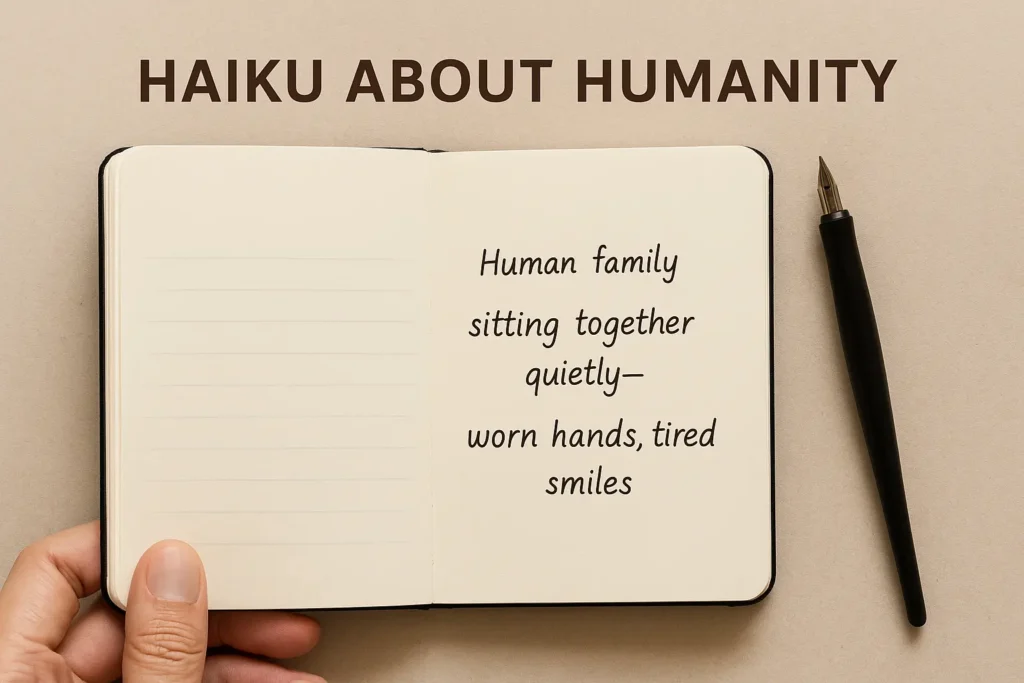
A haiku about humanity is a short poem—traditionally three lines following a 5–7–5 syllable structure—that captures an aspect of the human experience.
That experience might include:
- Love or loss
- Aging and mortality
- Kindness and cruelty
- Connection and isolation
- Hope, fear, or resilience
- Ordinary moments that reveal something universal
Unlike longer poems, haiku doesn’t analyze humanity. It observes it.
Think of a haiku as a snapshot rather than a documentary.
A Brief Look at Haiku’s Origins
Haiku originated in Japan over 400 years ago. Early haiku focused heavily on nature and seasons, using the external world as a mirror for inner life. Humans were rarely mentioned directly—but were always present implicitly.
For example, a falling leaf isn’t just a leaf. It’s aging. It’s impermanence. It’s us.
Over time, modern haiku evolved to include more explicit human themes, especially in Western traditions. Today, a haiku about humanity might focus directly on relationships, technology, conflict, or personal identity—while still honoring the form’s simplicity.
Why Humanity Fits So Well Into Haiku
Human life is made of fleeting moments:
- A glance held too long
- A goodbye you didn’t know was final
- A stranger’s kindness on a hard day
Haiku excels at capturing the brief but meaningful. That’s why it’s such a natural vessel for expressing humanity.
Why Haiku About Humanity Matters Today
We’re Over-Explained—but Understood
Modern communication often favors length: long posts, long arguments, long explanations. Yet understanding doesn’t always come from more words.
A haiku about humanity strips away excess and leaves only what matters.
In three lines, it can say:
- I see you.
- I’ve been there.
- This is what it feels like to be human.
The Power of Shared Experience
When you read a haiku about humanity and feel seen, you’re experiencing something profound: collective recognition.
Even if the poem comes from another culture or century, the emotion lands because humanity hasn’t changed as much as we like to think.
Pain still hurts. Love still risks loss. Hope still rises quietly.
Haiku as a Counterweight to Chaos
In uncertain times—pandemics, conflicts, social change—people gravitate toward art forms that offer clarity without oversimplification. Haiku does exactly that.
It doesn’t solve human problems.
It reminds us we’re not alone in them.
Benefits and Use Cases of Haiku About Humanity
Emotional Benefits
Reading or writing a haiku about humanity can:
- Increase emotional awareness
- Offer comfort during grief or stress
- Create a sense of connection
- Encourage mindfulness and presence
Because haiku focuses on a single moment, it naturally pulls you into the now—a powerful grounding effect.
Practical Use Cases
1. Personal Reflection and Journaling
Many people use haiku as a form of emotional journaling. Writing three short lines feels less intimidating than filling a page—and often more honest.
2. Education and Teaching Empathy
Teachers use haiku about humanity to help students explore emotions, ethics, and perspective in a non-preachy way.
3. Therapy and Mental Health
Therapists sometimes encourage clients to write haiku to process complex feelings safely and creatively.
4. Social Media and Blogging
Short, impactful haiku resonates strongly in digital spaces where attention is limited but emotion spreads quickly.
5. Memorials and Tributes
A haiku about humanity is often used in eulogies, remembrance posts, or dedications because it honors life without overstatement.
How to Write a Haiku About Humanity (Step-by-Step)
Step 1: Start With a Human Moment
Forget the poem for a second. Think of a moment.
Ask yourself:
- When did I feel deeply human?
- What moment changed me, even slightly?
- What emotion keeps returning?
Examples:
- Watching a parent age
- Holding a newborn
- Sitting alone in a crowded room
- Helping—or failing to help—someone
Step 2: Focus on One Emotion or Insight
A common mistake is trying to say too much. Haiku thrives on restraint.
Choose one emotional thread:
- Loneliness
- Hope
- Regret
- Compassion
Step 3: Use Concrete Imagery
Instead of telling the reader how humans feel, show it.
Not this:
We are lonely together
But this:
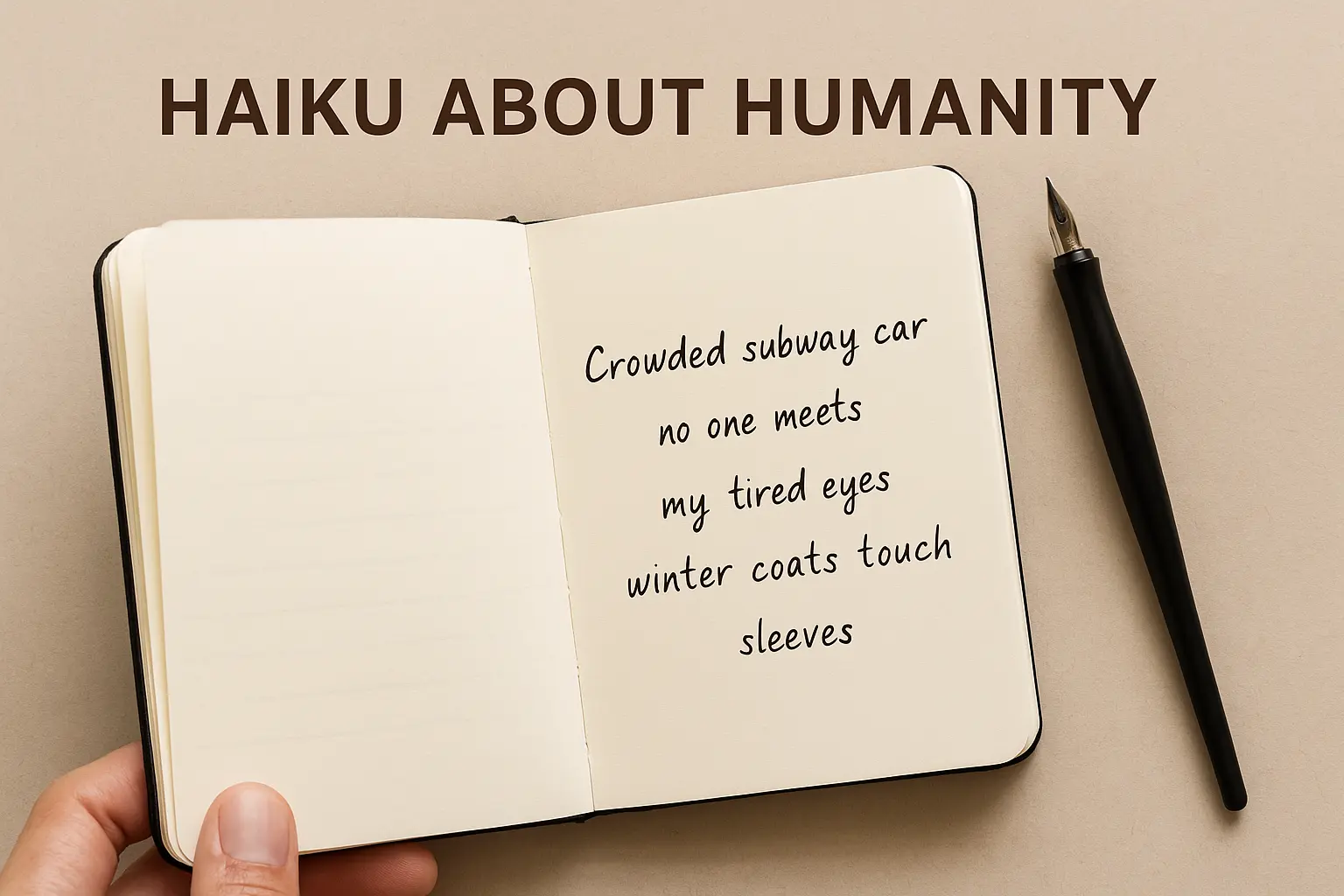
Crowded subway car
no one meets my tired eyes
winter coats touch sleeves
The second example lets humanity emerge naturally.
Step 4: Shape It Into the Haiku Form
Traditional structure:
- Line 1: 5 syllables
- Line 2: 7 syllables
- Line 3: 5 syllables
Modern haiku is more flexible, but structure can be a helpful discipline—especially for beginners.
Step 5: Revise Ruthlessly
Good haiku is edited, not spilled.
Ask:
- Can I remove a word?
- Is this image doing real work?
- Does it invite the reader in?
Best Practices for Writing a Strong Haiku About Humanity
- Avoid abstraction: Words like love, pain, or humanity itself are powerful—but use them sparingly.
- Trust the reader: Don’t explain the meaning.
- Leave space: What’s unsaid often matters more than what is said.
- Read widely: Exposure sharpens intuition.
Tools, Resources, and Recommendations
Free Tools
- Online Syllable Counters – Helpful when learning structure
- Poetry Foundation Archive – Read classic and modern haiku
- Personal Journal or Notes App – Simple but effective
Paid Tools (Optional)
- Writing Apps (Scrivener, iA Writer)
- Pros: Clean interface, focus-friendly
- Cons: Overkill for short poems
Books Worth Reading
- The Haiku Handbook by William J. Higginson
- Haiku in English edited by Jim Kacian
Human Feedback Beats Any Tool
No tool replaces sharing your haiku about humanity with real people and listening to how it lands. The reaction—silence, reflection, emotion—is your best metric.
Common Mistakes When Writing Haiku About Humanity (and How to Fix Them)
Mistake 1: Being Too Vague
Why it happens: Fear of vulnerability
Fix: Anchor the poem in a physical detail
Mistake 2: Overexplaining the Message
Why it happens: Wanting to be “understood”
Fix: Let the image carry the weight
Mistake 3: Forcing the Syllables
Why it happens: Obsessing over 5–7–5
Fix: Flow first, structure second
Mistake 4: Trying to Sound “Poetic”
Why it happens: Imitating clichés
Fix: Write plainly. Humanity already is poetic.
Real Examples of Haiku About Humanity (Original Samples)
Here are a few original examples to illustrate different angles of humanity:
On Aging
Father’s old hands shake
counting change at the counter
I look away first
On Connection
Video call freezes
your smile stuck mid-laughter—
still warms the room
On Compassion
Homeless man nods once
when I say “good morning”
the day feels lighter
Notice how none of these explain humanity. They let it appear.
Why Haiku About Humanity Endures
Trends change. Platforms rise and fall. But humans keep searching for meaning in their lives.
A haiku about humanity endures because it honors three truths:
- Life is brief
- Moments matter
- We are not alone
Seventeen syllables may be small—but humanity has never required much space to reveal itself.
Conclusion: A Small Poem With a Big Heart
A haiku about humanity reminds us that even in a complex, fast-moving world, understanding can arrive quietly.
You don’t need to be a poet to appreciate—or write—one. You only need to pay attention.
Pay attention to the way people pause before answering.
To the moments you almost ignore.
To the ordinary scenes that carry extraordinary weight.
That’s where humanity lives.
And that’s where haiku begins.
If this article resonated with you, consider writing your own haiku today—or sharing one that has stayed with you. Sometimes, a few honest lines can say what entire conversations cannot.
FAQs
A haiku about humanity focuses on human experiences, emotions, or relationships rather than nature alone, though imagery may still be used symbolically.
Not always. Traditional haiku follows it, but modern haiku often prioritizes clarity and impact over strict syllable counts.
Absolutely. In fact, beginners often write more authentic haiku because they’re less concerned with sounding “poetic.”
Yes. They’re widely used in education to teach empathy, observation, and emotional literacy.
Yes. Many therapists use short-form poetry as a safe way to explore complex emotions.
-

 HEALTH7 months ago
Children’s Flonase Sensimist Allergy Relief: Review
-

 BLOG6 months ago
Discovering The Calamariere: A Hidden Gem Of Coastal Cuisine
-

 TECHNOLOGY6 months ago
How to Build a Mobile App with Garage2Global: From Idea to Launch in 2025
-

 TECHNOLOGY2 months ago
AVtub: The Rise of Avatar-Driven Content in the Digital Age
-

 BLOG7 months ago
Warmables Keep Your Lunch Warm ~ Lunch Box Kit Review {Back To School Guide}
-

 HEALTH7 months ago
Turkey Neck Fixes That Don’t Need Surgery
-

 BLOG6 months ago
Keyword Optimization by Garage2Global — The Ultimate 2025 Guide
-

 EDUCATION2 months ago
HCOOCH CH2 H2O: Structure, Properties, Applications, and Safety of Hydroxyethyl Formate